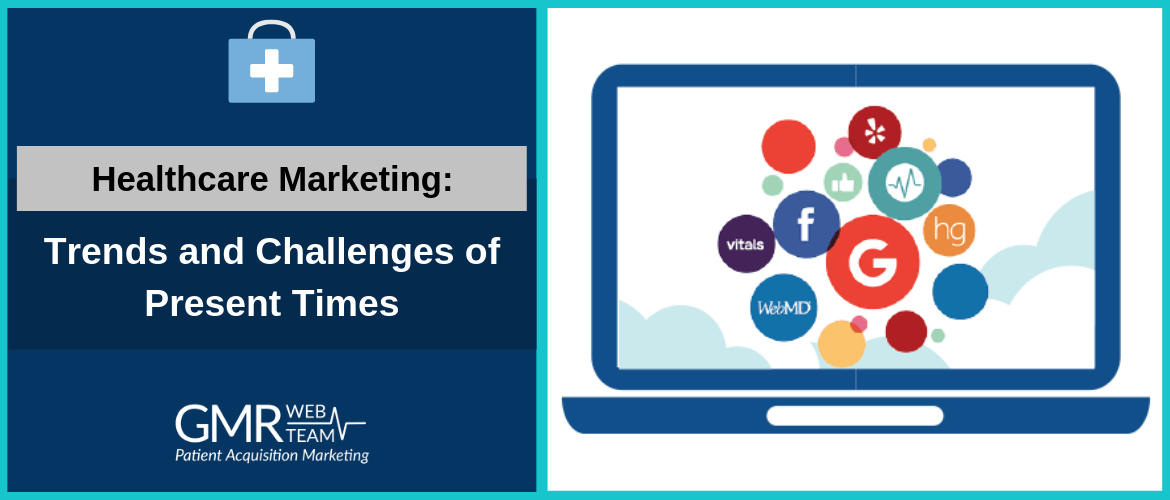
Present healthcare consumers are much different than the healthcare consumers of the past. Today, patients are doing extensive research online, which means they are more particular about the services they receive. This has increased the need for a tactful healthcare digital marketing strategy to help medical practices and organizations find their customers via digital and social media to generate more business online.
Read This Post »
Having a right marketing agency by your side that can help elevate your healthcare practice’s growth is like living a healthy lifestyle; it improves the overall health and longevity of your practice. As the healthcare landscape is becoming more and more competitive, it’s becoming more difficult for providers and practices to go at it on their own.
Healthcare providers are taking short steps in finding the right healthcare marketing agencies with which they can work side by side for mutual benefits. In this blog,...
Read This Post »
Healthcare marketing strategy is an inbound marketing process where we bring forth all the resources that could bear against various opportunities and threats of a highly competitive healthcare business. The resources could be any original content, including blog posts, articles, podcasts, informational videos, and interviews on medical topics, while the opportunities and threats are concerned with persuading your patients to come to you.
Read This Post »
As a promotional strategy, healthcare marketing should utilize different marketing channels and tools to create, optimize, and share valuable, branded health-related content that doesn’t just help teach and promote public health information, but also promotes the particular healthcare brand publishing the content.
Read This Post »
In today’s digital world, the internet has enabled patients to seek out information, compare all options, and make decisions regarding their health. Whether you are a dentist, physician, gynecologist, or gastroenterologist, it has become crucial for all the healthcare providers to adapt to a marketing strategy that focuses on building the three pillars for their healthcare business – i.e., a satisfied and loyal patient base, a stellar online reputation, and a robust internet presence.
Read This Post »
Today, when more and more patients are increasingly relying on the web for medical information, the term ‘patient acquisition marketing’ refers to the healthcare brands’ need to align with patients’ needs across the web. You need to show that your practice is the best choice for patients’ healthcare needs, through your websites, email programs, social media, advertisement campaigns, YouTube channel and more. Why?
47% of internet users search for information about doctors or
Read This Post »
Growth is a major factor to ensuring your healthcare practice remains successful. If you’re not growing your patient base, then your revenue will remain stagnant. However, growth doesn't happen easily. It requires hard work, diligence, and perseverance toward some defined focus areas – the drivers of growth – before your practice can actually achieve consistent growth. For your healthcare practice, those drivers of growth are your patients. That's why everything that you do should be centered on your...
Read This Post »
The patient acquisition cycle starts with acquiring new patients and keeps advancing with retaining them as your loyal customers, and further keeps on revolving with getting more number of patients referred by your existing happy patients, and so on. The fuel that keeps on rotating this cycle to get more patients is derived from an inspiration of providing an exceptional patient experience
Read This Post »
The modern healthcare marketing concept integrates the traditional marketing tactics with online marketing methods for matching up to the growing expectations of the informed, aware, and tech-savvy patients. The success of this marketing strategy depends on an enhanced patient experience through increased communication, engagement, and interaction.
Read This Post »
Improving HCAHPS (the Hospital Consumer Assessment of Healthcare Providers and Systems) scores is essential because it will reflect in the overall rating for your hospital or medical clinic by Medicare. Because this rating is publicly reported on Medicare website's Hospital Compare page, it poses a risk of losing your prospective patients to your competitors. Not just that, a lower performance on HCHAPS scores can put 2% of your practice's reimbursement at risk.
Read This Post »